
The Power of Machine Learning
Students will explore how computers learn from data without giving the computer explicit directions. Students will undergo an AI training simulation to understand how machine learning works. The class will collectively train an AI model, and discover real-world applications in computer vision, speech recognition, and recommendation systems.

The Science of Secrets
Through historic anecdotes, a little math, some algorithmic thinking, and a problem-solving approach, this lesson introduces the science of hiding and encrypting information. Students will create their own Caesar ciphers and apply cryptanalysis techniques to evaluate their effectiveness against basic (but common) attacks.

What’s the Matter?
In this interactive lesson, students will explore how temperature, viscosity, and molecular interactions affect states of matter through activities like the “Ice Cube Game” and making oobleck. They’ll discover the behavior of non-Newtonian liquids, understand viscosity, and learn how science models help explain these phenomena.
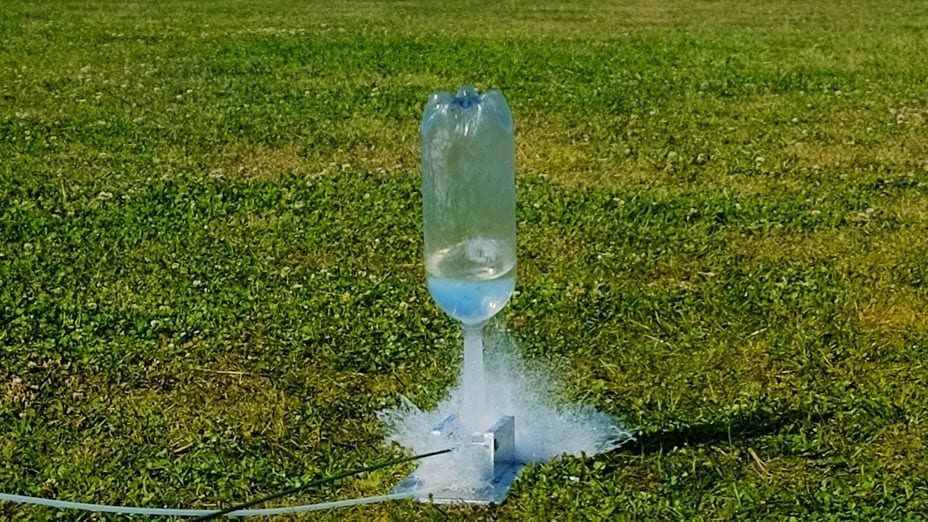
Blast Off! DIY Bottle Rockets
Applying both chemistry and physics (with a little engineering), students will learn about the explosive reaction between vinegar and sodium bicarbonate (more commonly known as baking soda) that will power their rocket’s take-off, as well as how propulsion will launch the rocket up, with gravity and drag bringing it back down. Students will then set-up their rockets, as well as build the platforms that they will launch from.

From 2D Design to 3D Printing
Students will explore the fundamentals of 3D printing by designing and creating their own small objects. Through hands-on experimentation, they’ll learn about digital modeling, slicing programs, and material properties, gaining insight into how 3D printing is transforming industries from healthcare to aerospace.
 MIT Spokes 2026